A collaborative robot is sold as a machine you can put beside a person without a fence. That is a marketing shorthand, not a safety guarantee. The robot is one part of a risk assessment. Used well, a cobot can make automation viable for small batches and mixed production. Used as a cheap substitute for an industrial arm, it often disappoints.
This guide covers what a cobot actually costs in India in 2026, where the money goes beyond the arm, and the questions that separate a workable project from an expensive demonstration.
What “collaborative” really means
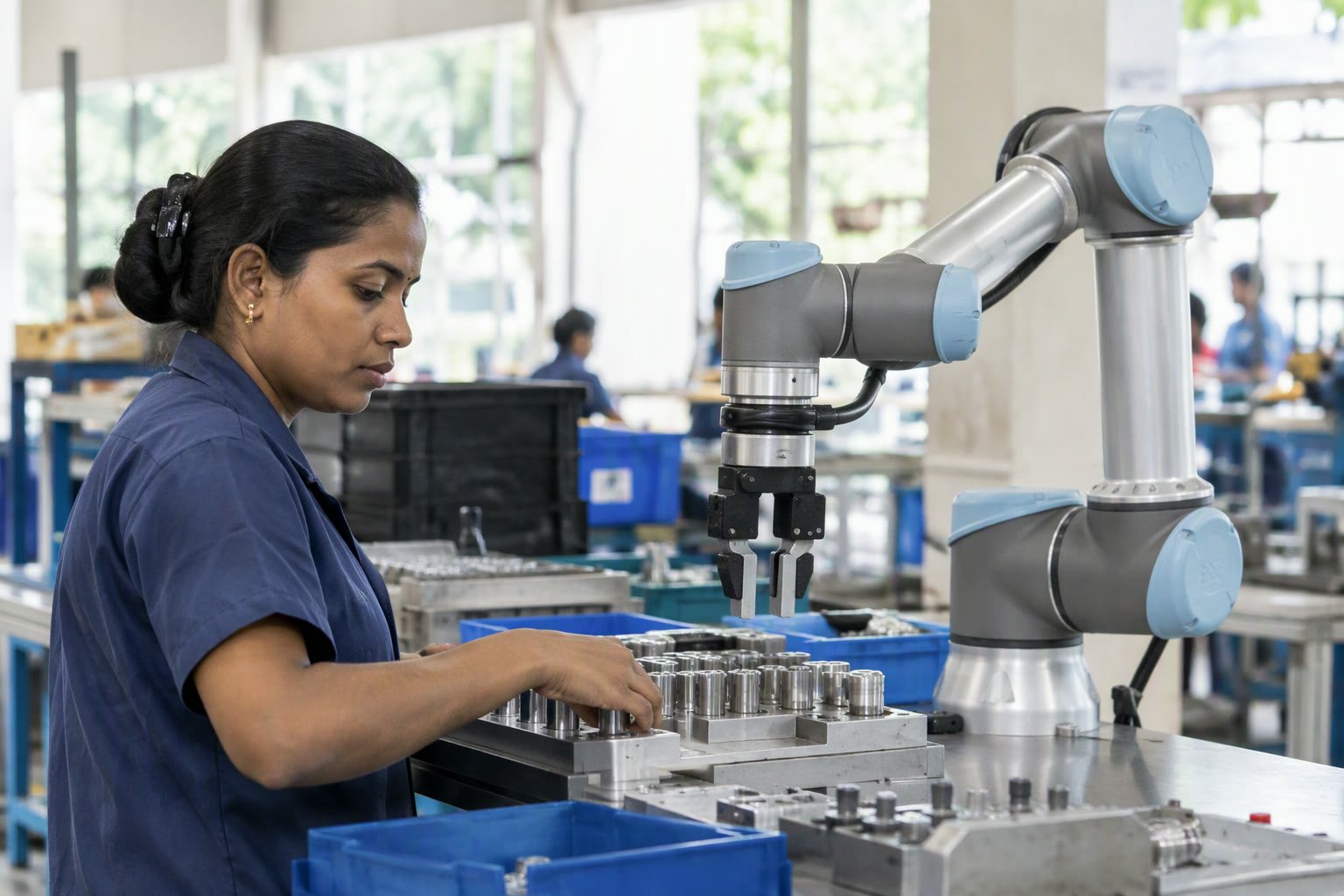
Collaborative robots are designed to work in shared space, using rounded joints, force limits, speed monitoring and safety-rated inputs. Standards such as ISO 10218 and the technical specification ISO/TS 15066 define how a risk assessment should treat power and force limits, speed and separation monitoring, and hand guiding.
None of that removes the need for an assessment. A gripper holding a knife, a sharp workpiece or a hot tool can still injure someone. The cobot reduces risk; it does not erase it. Budget for the assessment and any guarding the assessment calls for.
Where cobots make sense
| Application | Why a cobot fits | Watch out for |
|---|---|---|
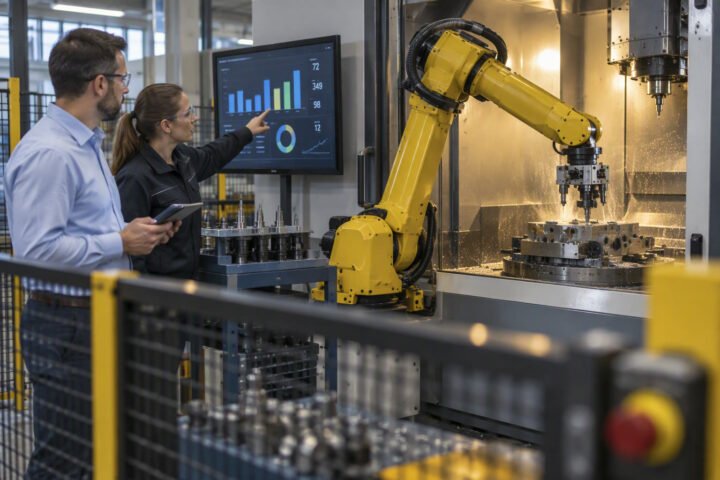
| Machine tending beside an operator | Shared space, frequent changeovers | Door interlocks and machine safety |
| Assembly with manual loading | Operator can load parts by hand | Cycle time may not beat manual work |
| Inspection and test handling | Low volume, many variants | Gripper changeover time |
| Palletising small cartons | Compact footprint, easy reprogramming | Reach and payload limits |
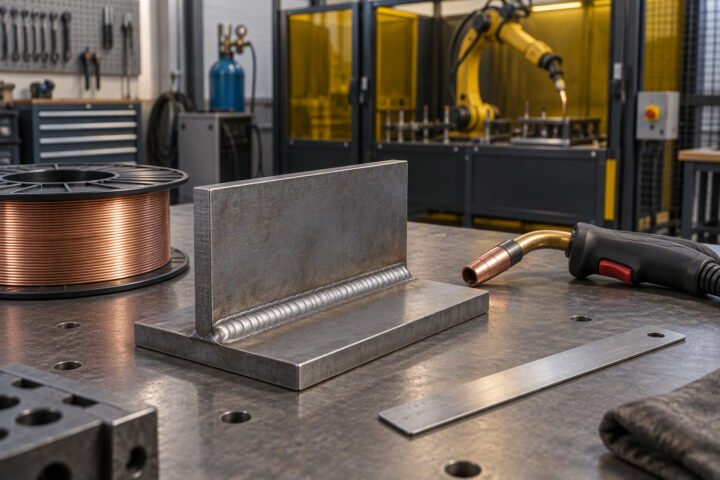
| Welding in small job shops | Flexible, quick to redeploy | Fume extraction and fixturing cost |
The pattern is low volume, high variety, and a person already in the loop. If the process runs one part, at high speed, behind a fence, a conventional industrial robot is usually cheaper and faster.
Price bands in India
Indicative 2026 ranges, before GST. Arm prices vary with payload, reach, brand and whether the controller and software licences are included.
| Class | Payload | Arm and controller | Typical use |
|---|---|---|---|
| Entry cobot | 3–5 kg | ₹8–15 lakh | Machine tending, light assembly |
| Mid cobot | 10–16 kg | ₹15–28 lakh | Palletising, welding, heavier assembly |
| Large cobot | 20–30 kg | ₹25–40 lakh | Packaging, heavy part handling |
| Complete cell | Varies | ₹15–50 lakh | Gripper, fixture, safety assessment, integration |
A bare arm is not a working cell. The realistic project budget is often 1.5 to 2.5 times the arm price once you add the gripper, fixture, safety assessment, programming, training and commissioning.
The payload trap
Cobot payload ratings assume a tool centre point close to the wrist. Add a heavy gripper, a camera, a welding torch and a long bracket, and the usable payload falls quickly. A 10 kg cobot with a 4 kg end effector and a part at 300 mm from the flange may be at its limit before the part is picked up.
Always calculate payload at the actual centre of gravity and the actual distance. Vendors publish payload diagrams for a reason; use them before you shortlist.
Cobot versus industrial arm
- Speed. Industrial arms are faster for the same payload. If cycle time is the constraint, a cobot may not pay back.
- Safety. A cobot reduces guarding but does not eliminate assessment. A fenced industrial cell can be cheaper for a fixed process.
- Flexibility. Cobots are easier to move and reprogram, which matters for job shops and labs.
- Service. Check local service depth. A cheap arm with no engineer within 500 km is not cheap.
- Resale. Established brands hold value better, which matters if the process changes.
A realistic payback check
Take a machine-tending cell that replaces one operator per shift at ₹25,000 a month fully loaded, and costs ₹22 lakh installed. The direct saving is ₹3 lakh a year per shift, before maintenance and programming time. Two shifts get you to ₹6 lakh a year, and payback is still nearly four years. The case usually needs either a utilisation increase, a quality improvement, or difficulty in hiring to close.
This is why cobot projects succeed when they solve a specific bottleneck, not when they are bought to “start with automation”.
Buying checklist
- Payload at the real centre of gravity, including gripper, camera and cable management.
- Reach at the worst-case point, not the centre of the fixture.
- Cycle time measured on your part, or a written estimate with assumptions.
- Safety assessment included in scope, with a named responsible person.
- Gripper and fixture design quoted separately so you can compare.
- Training for at least two people, and a written handover.
- Spares and response time in the contract, not just in the sales conversation.
Related: cobot welding for small business, industrial robot costs, SCARA robots, robot safety standards in India, gripper design basics.
What is a cobot?
A collaborative robot is an industrial robot designed to work in shared space with people, using force limits, speed monitoring and rounded joints. It still requires a risk assessment and may still need guarding depending on the tool and part.
How much does a cobot cost in India?
Indicative 2026 ranges are ₹8–15 lakh for an entry 3–5 kg arm, ₹15–28 lakh for a 10–16 kg arm, and ₹15–50 lakh for a complete installed cell, before GST.
Can a cobot work without a safety fence?
Often yes, but only after a documented risk assessment under ISO 10218 and ISO/TS 15066. Sharp tools, hot parts and heavy payloads can still require separation or guarding.
Is a cobot slower than an industrial robot?
Yes, generally. Cobots trade speed for safety and flexibility. If cycle time is the main constraint, a fenced industrial cell is usually the better choice.
Do I need a licence to use a cobot in India?
No robot licence is required, but the factory still falls under the Factories Act and applicable safety standards. A risk assessment and documented safety measures are expected.
Plan the TCP and payload setup before the first production program.
If the task is loading parts into a machine, the economics differ from welding: machine tending robot costs and feasibility in India.
Palletizing is one of the better cobot applications; see cobot palletizing cell prices and payback.
Not sure whether a cobot is the right class of robot at all? See cobot vs industrial robot first.
The cobot case depends on utilisation; see how to calculate robot payback honestly.
If budget is tight, compare the new cobot quote with a used industrial robot before deciding.
If a traditional arm fits better, start with the FANUC, KUKA, ABB and Yaskawa comparison.
Start with the payload calculation, then compare cobots.
Budget for the end effector as part of the cobot price, not after.
Reach and footprint decisions belong in the robot cell layout guide.
The assessment you must complete is covered in the cobot risk assessment guide.
Cobots are increasingly offered as a service, and the robot-as-a-service section covers how those deals are priced.
A cobot quote may or may not include a wrist sensor; check what a force torque sensor adds before comparing prices.
A cobot cell usually needs an infeed conveyor, and the conveyor integration guide explains what to specify.
For the conventional arm alternative, see choosing an industrial robot in India.
Cobot programs are usually taught by hand, but offline programming is worth considering once you run several identical cells.
The safety claim on a cobot datasheet only holds for a specific ISO/TS 15066 assessment of your application.
Smaller cells are easier to fund, and the MSME automation subsidy guide explains the approval sequence that most buyers get wrong.
Sources and further reading
- ISO 10218-1 — safety requirements for industrial robots.
- ISO 9283 — performance criteria and test methods.
- Universal Robots — cobot payload diagrams and application guidance.
- International Federation of Robotics — collaborative robot statistics and definitions.