Tutorials
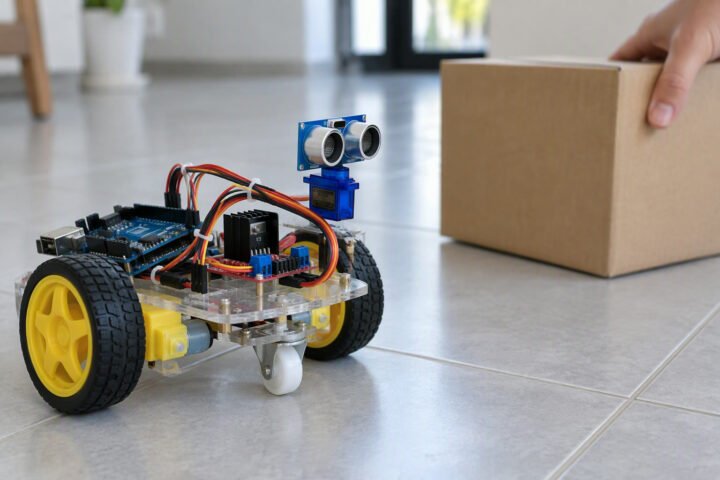
Obstacle Avoiding Robot Code with Arduino and HC-SR04
Wire an HC-SR04 properly, write a decision loop that escapes corners, and fix the power and sensing faults that make beginner robots…
Learn
Plain-English tutorials that build on each other: a pin, a sensor, a control loop, a node. Written for people who have to make the robot move.
Everything here is written to be used on a bench, not admired on a slide. Each guide answers one question a builder actually hits: why the servo browns out the board, why the sensor reading jumps, which board to buy with ₹3,000, what an examiner expects in the report. Prices are planning ranges in rupees, and every build sheet says what it has not tested. These robotics tutorials are written to be used on a bench, and each one answers a single question builders hit.
These guides cover the industrial side: what a robot cell costs in India, what a safety audit has to test, and what a maintenance contract or insurance policy actually covers.
Every article is reviewed against manufacturer datasheets and current Indian listings, then dated. Nothing on this site claims a physical build test unless the article says so and shows the evidence. If a guide conflicts with a datasheet or a safety standard, the datasheet wins — see the editorial standard for the full process.
If you have never powered a motor, read the power guide and the battery guide before buying a driver. If you have a project deadline, read the final-year project list and the report format together; the build is only half the marks. If you are choosing a branch specialisation, start with the careers guide and then build one project from the library so the interview has something concrete to discuss.
Building a machine for a factory rather than a bench? The industrial robotics guides apply the same engineering discipline at plant scale: specifying the robot, commissioning the cell and proving it is safe.
No. The site has a guide to learning the control logic and code without buying parts first, so you can start with a simulator or an emulator and buy components once you know what the build needs.
Most beginner projects here use an Arduino Uno or an Arduino Nano, because the parts are cheap and widely documented in India. Move to an ESP32 when you need WiFi or faster processing.
Each project page lists its parts with rupee prices, so you can cost a build before ordering anything.
The guides set out a parts list, the wiring and a test that proves the build works, which is the evidence most submissions are marked on. Check your department requirements before you rely on them.
Tutorials
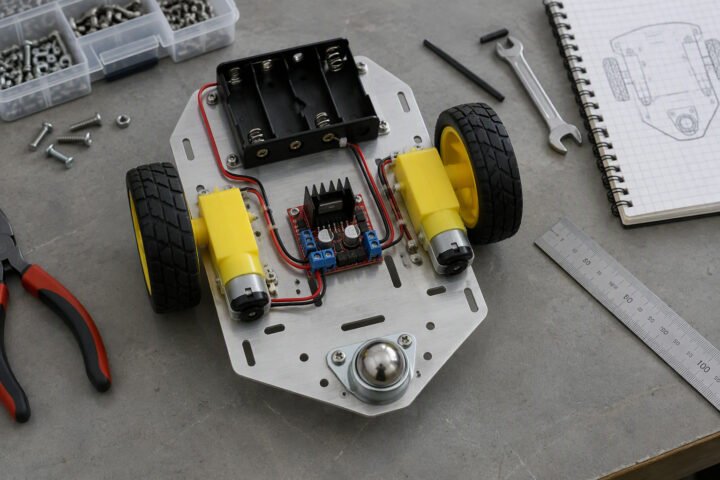
Wire an HC-SR04 properly, write a decision loop that escapes corners, and fix the power and sensing faults that make beginner robots…
Careers
Choose projects that prove the skill a recruiter is hiring for, document them with a README and honest metrics, and build a…
Tutorials
Pick a drive layout, do the tipping and load maths, choose plate material and thickness, place wheels and electronics for service access,…
Tutorials
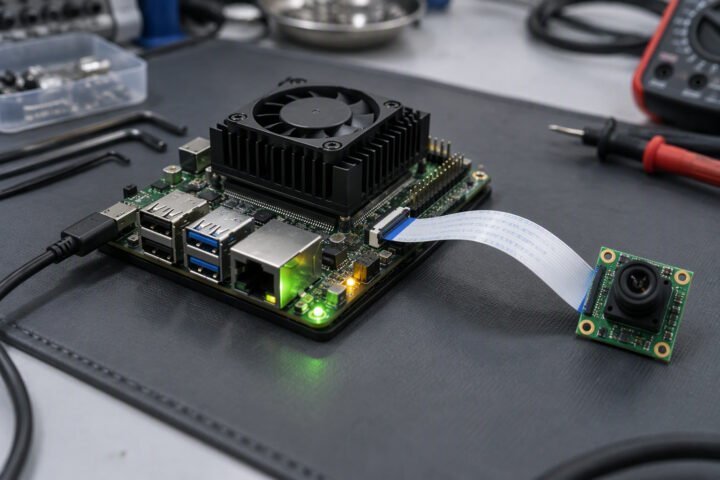
Flash the board, verify CUDA and OpenCV, build a TensorRT engine, capture with GStreamer and manage power and thermals for a working…
Tutorials
Read IP ratings correctly, find the leak points that actually fail, calculate sealed-panel heat, and specify a fabrication that survives dust and…
Buying guides
Size a robot on payload, reach and cycle time, compare repeatability with accuracy, budget the whole cell, and ask suppliers the questions…
Buying guides
Choose a conveyor for a robot cell, do the throughput arithmetic, design the handshake, cover the safety basics and send a specification…
Tutorials
Tune P, I and D in the right order, read a step response instead of guessing, add anti-windup and feedforward, and know…
Tutorials
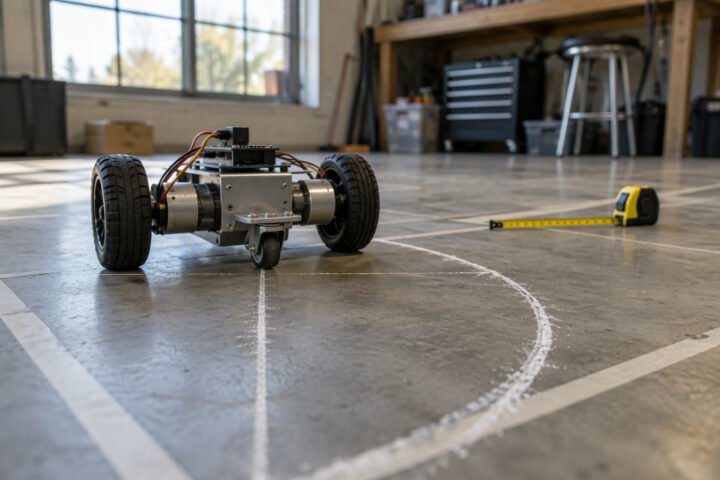
Convert encoder counts to a robot pose, calibrate wheel radius and track width, understand the error sources, and publish odometry correctly in…
Tutorials
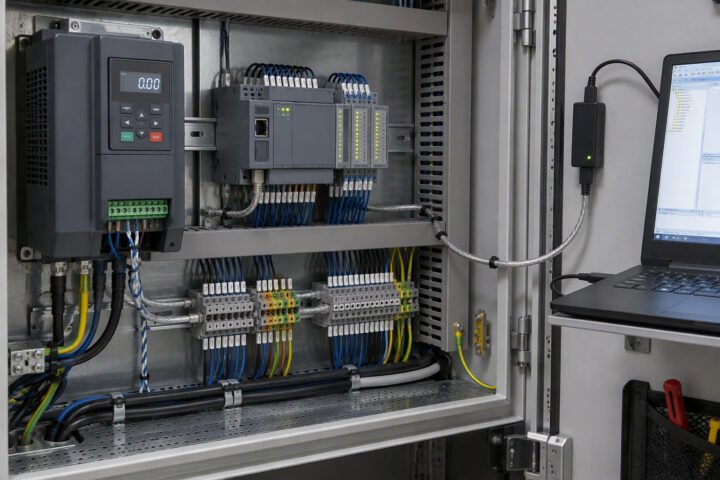
Wire RS485 correctly, understand registers and function codes, poll a drive from Python, and read Modbus exception codes in an Indian robot…