Tutorials
ESP32-CAM robot guide: vision, streaming, latency and limits
Put an ESP32-CAM on a robot: wiring and power, the CameraWebServer path, realistic latency, and when a Raspberry Pi or Jetson becomes…
Learn
Plain-English tutorials that build on each other: a pin, a sensor, a control loop, a node. Written for people who have to make the robot move.
Everything here is written to be used on a bench, not admired on a slide. Each guide answers one question a builder actually hits: why the servo browns out the board, why the sensor reading jumps, which board to buy with ₹3,000, what an examiner expects in the report. Prices are planning ranges in rupees, and every build sheet says what it has not tested. These robotics tutorials are written to be used on a bench, and each one answers a single question builders hit.
These guides cover the industrial side: what a robot cell costs in India, what a safety audit has to test, and what a maintenance contract or insurance policy actually covers.
Every article is reviewed against manufacturer datasheets and current Indian listings, then dated. Nothing on this site claims a physical build test unless the article says so and shows the evidence. If a guide conflicts with a datasheet or a safety standard, the datasheet wins — see the editorial standard for the full process.
If you have never powered a motor, read the power guide and the battery guide before buying a driver. If you have a project deadline, read the final-year project list and the report format together; the build is only half the marks. If you are choosing a branch specialisation, start with the careers guide and then build one project from the library so the interview has something concrete to discuss.
Building a machine for a factory rather than a bench? The industrial robotics guides apply the same engineering discipline at plant scale: specifying the robot, commissioning the cell and proving it is safe.
No. The site has a guide to learning the control logic and code without buying parts first, so you can start with a simulator or an emulator and buy components once you know what the build needs.
Most beginner projects here use an Arduino Uno or an Arduino Nano, because the parts are cheap and widely documented in India. Move to an ESP32 when you need WiFi or faster processing.
Each project page lists its parts with rupee prices, so you can cost a build before ordering anything.
The guides set out a parts list, the wiring and a test that proves the build works, which is the evidence most submissions are marked on. Check your department requirements before you rely on them.
Tutorials
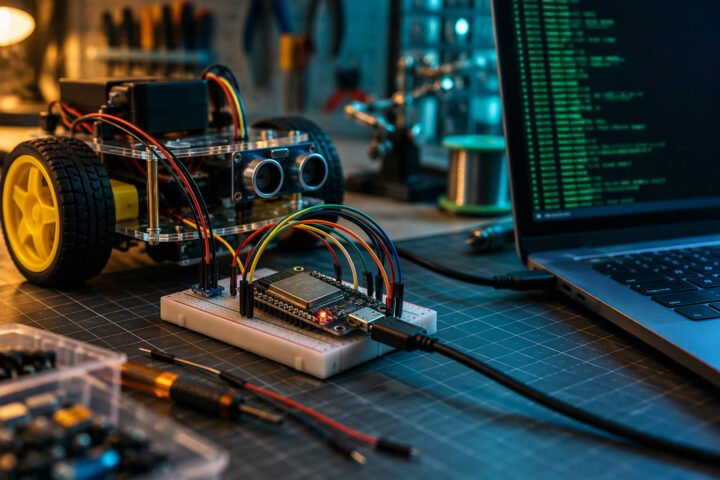
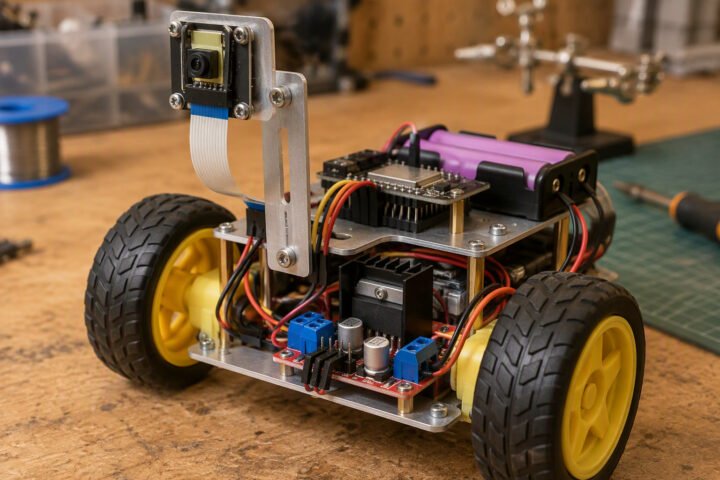
Put an ESP32-CAM on a robot: wiring and power, the CameraWebServer path, realistic latency, and when a Raspberry Pi or Jetson becomes…
Tutorials
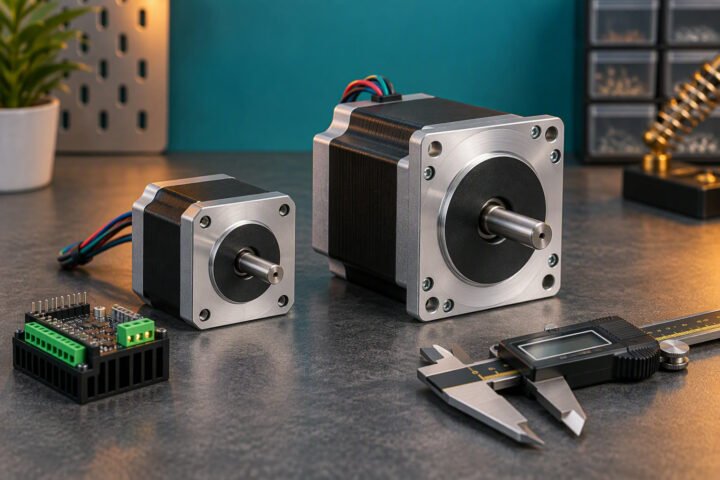
Compare NEMA 17 and NEMA 23 steppers on torque, current, drivers, voltage and Indian prices, and see how to size an axis…
Tutorials
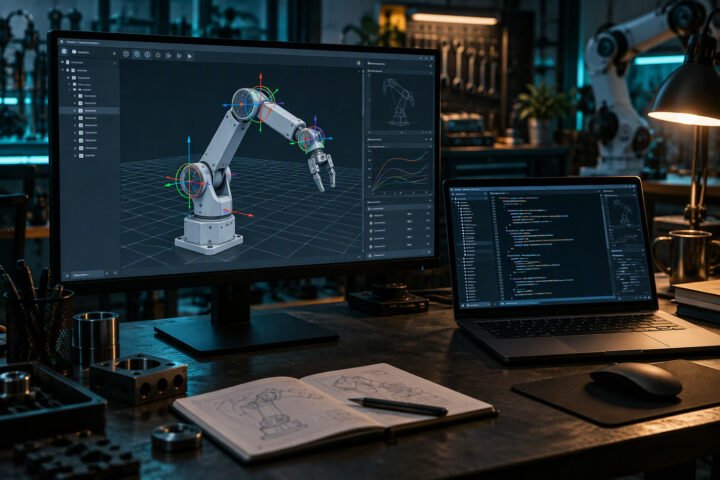
URDF describes a robot for ROS; SDF describes a world for Gazebo. Learn the differences, how conversion works and the workflow that…
Tutorials
Record the right topics, compress sensibly, replay with simulated time and avoid the QoS and storage mistakes that make a rosbag useless.
Tutorials
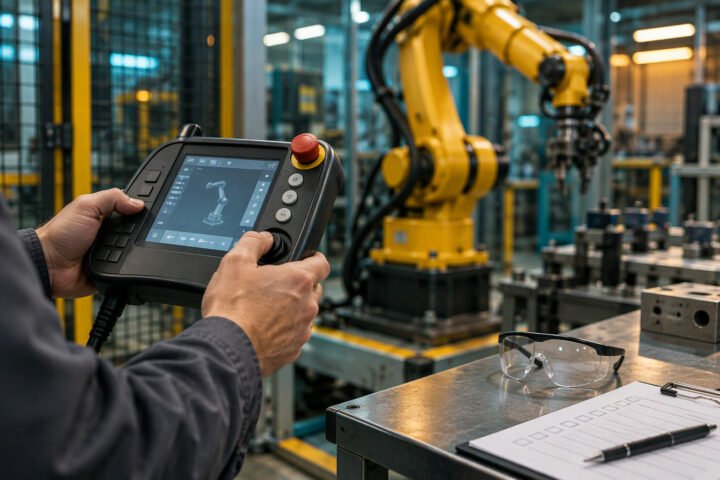
Learn teach pendant programming across FANUC, KUKA, ABB and Yaskawa: operating modes, coordinate frames, motion instructions and safe practice.
Buying guides
Compare the four major industrial robot brands on programming, service, spares and software, and see what should actually decide the purchase in…
Tutorials
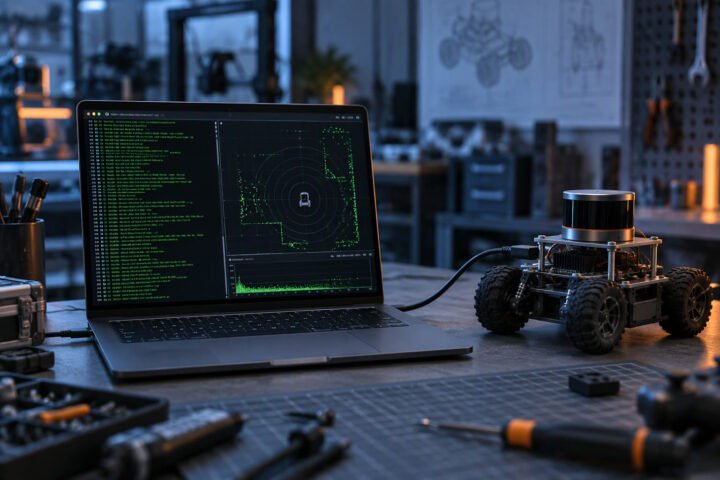
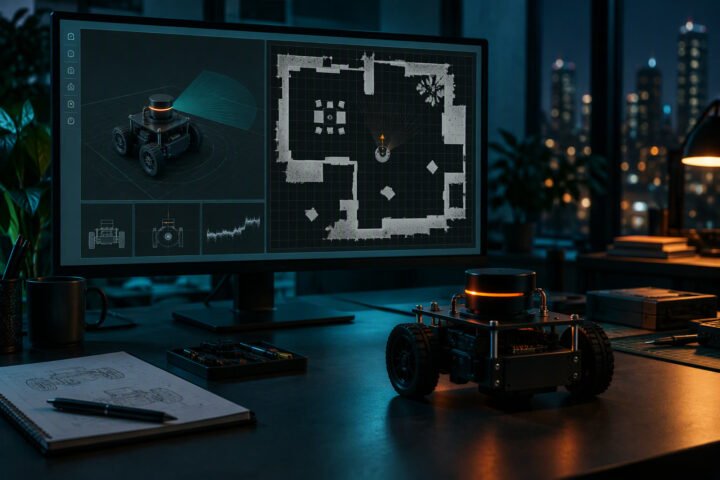
Set up SLAM Toolbox in ROS 2: required transforms, launch commands, the parameters that matter, saving maps and the failure modes to…
Tutorials
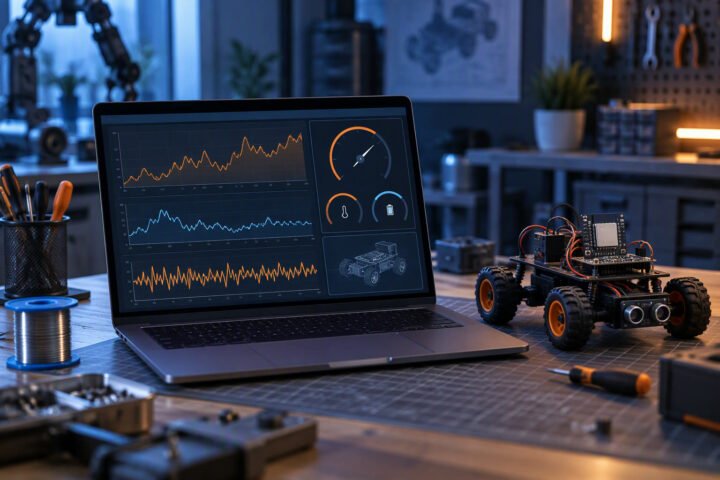
Design MQTT topics for a robot, pick the right QoS, publish telemetry from an ESP32 and avoid the buffering and Wi-Fi traps…
Tutorials
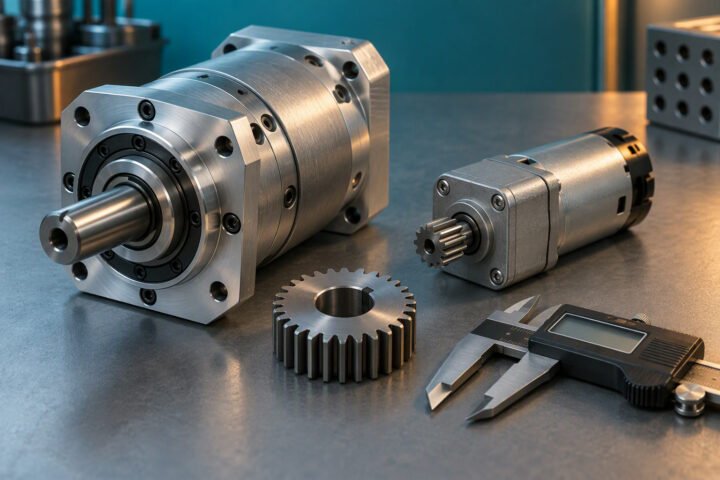
Compare spur, planetary and harmonic gearboxes on torque density, backlash, efficiency and Indian prices, and see which joint each one suits.
Tutorials
How micro-ROS works, installing the agent, a minimal ESP32 publisher, transport choices and the limits you hit on a microcontroller.