Tutorials
Agricultural robots India: what works, what it costs, what is hype
Spray drones, optical sorters and the smallholder reality, plus the ₹10,000 row-following robot a student can build.
Learn
Plain-English tutorials that build on each other: a pin, a sensor, a control loop, a node. Written for people who have to make the robot move.
Everything here is written to be used on a bench, not admired on a slide. Each guide answers one question a builder actually hits: why the servo browns out the board, why the sensor reading jumps, which board to buy with ₹3,000, what an examiner expects in the report. Prices are planning ranges in rupees, and every build sheet says what it has not tested. These robotics tutorials are written to be used on a bench, and each one answers a single question builders hit.
These guides cover the industrial side: what a robot cell costs in India, what a safety audit has to test, and what a maintenance contract or insurance policy actually covers.
Every article is reviewed against manufacturer datasheets and current Indian listings, then dated. Nothing on this site claims a physical build test unless the article says so and shows the evidence. If a guide conflicts with a datasheet or a safety standard, the datasheet wins — see the editorial standard for the full process.
If you have never powered a motor, read the power guide and the battery guide before buying a driver. If you have a project deadline, read the final-year project list and the report format together; the build is only half the marks. If you are choosing a branch specialisation, start with the careers guide and then build one project from the library so the interview has something concrete to discuss.
Building a machine for a factory rather than a bench? The industrial robotics guides apply the same engineering discipline at plant scale: specifying the robot, commissioning the cell and proving it is safe.
No. The site has a guide to learning the control logic and code without buying parts first, so you can start with a simulator or an emulator and buy components once you know what the build needs.
Most beginner projects here use an Arduino Uno or an Arduino Nano, because the parts are cheap and widely documented in India. Move to an ESP32 when you need WiFi or faster processing.
Each project page lists its parts with rupee prices, so you can cost a build before ordering anything.
The guides set out a parts list, the wiring and a test that proves the build works, which is the evidence most submissions are marked on. Check your department requirements before you rely on them.
Tutorials
Spray drones, optical sorters and the smallholder reality, plus the ₹10,000 row-following robot a student can build.
Tutorials
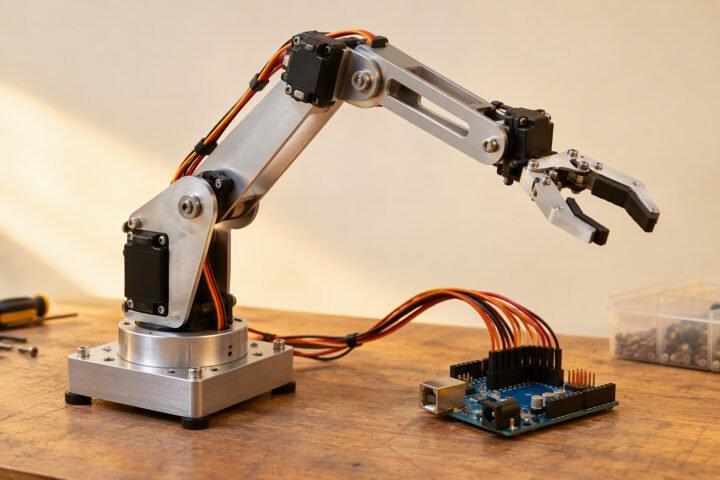
Two-link equations, a worked example, Python code and the servo-mapping steps that turn angles into movement.
Buying guides
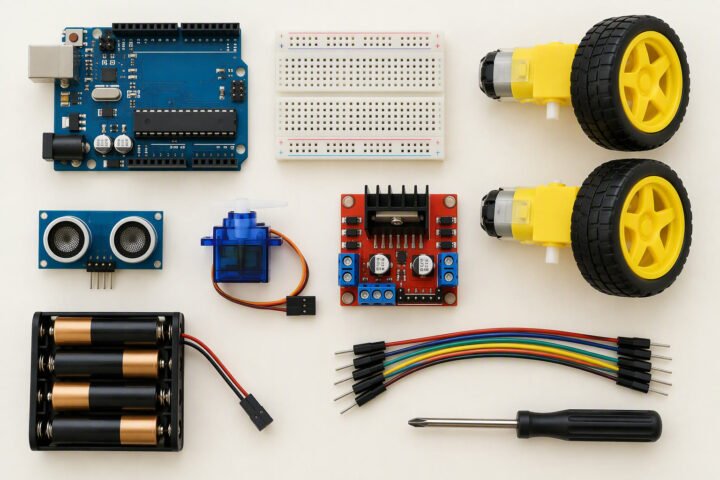
Age bands, four kit families, price bands from ₹2,500 to ₹45,000, and the warning signs that mark an expensive toy.
Tutorials
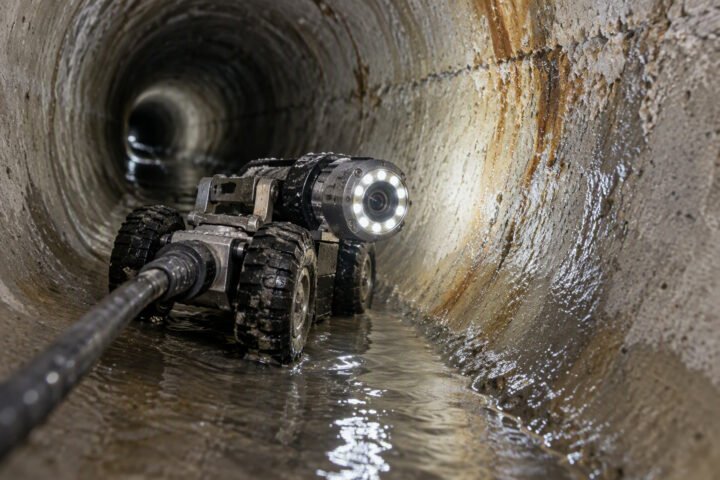
Crawler types, pipe size ranges, PACP and WRc coding, Indian pricing, and a ₹5,000 ESP32-CAM build for small pipes.
Tutorials
India installs about 8,500 industrial robots a year. The cell types, costs, integration work and safety rules behind those numbers.
Tutorials
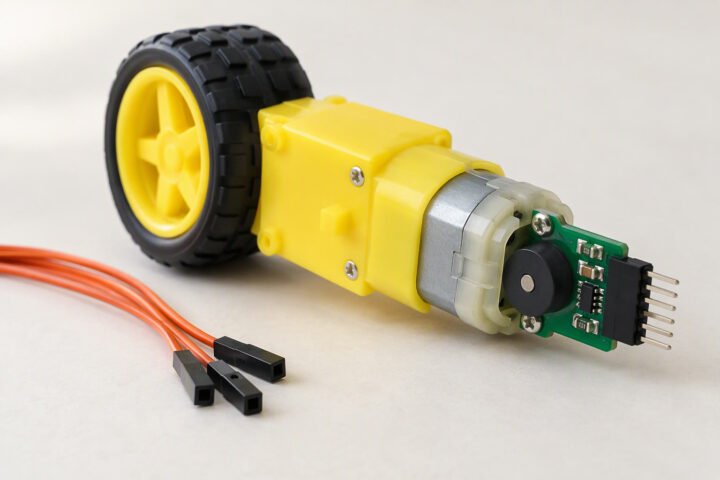
PPR, CPR and the gearbox trap, how to calibrate counts per revolution in five minutes, and how counts become distance and heading.
Tutorials
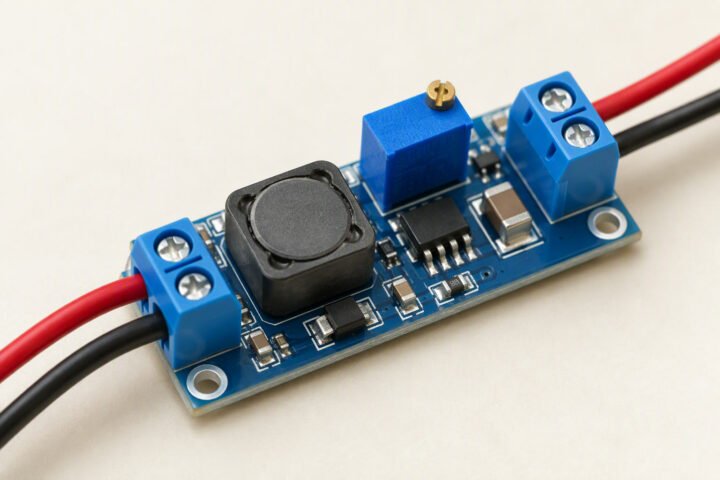
The ₹100 module is rated for a current it cannot hold. Compare LM2596, MP1584 and XL4015 by heat, set the output safely,…
Tutorials
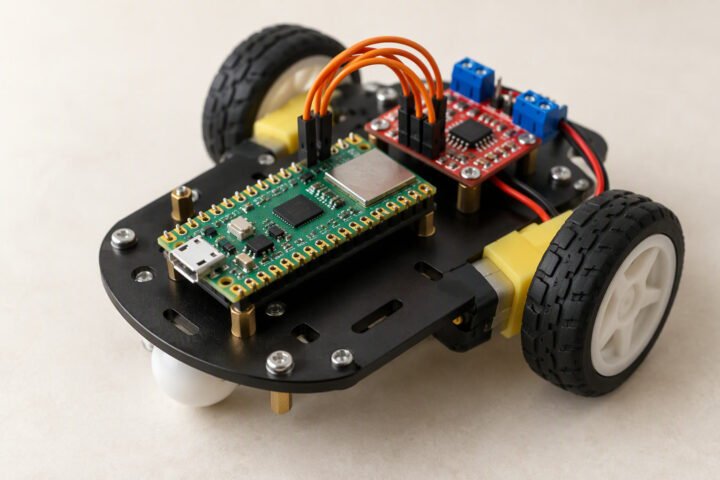
A ₹500 board with Wi-Fi, 26 GPIOs and 16 PWM channels. Pin map, 3.3 V power rules and MicroPython code for a…
Tutorials
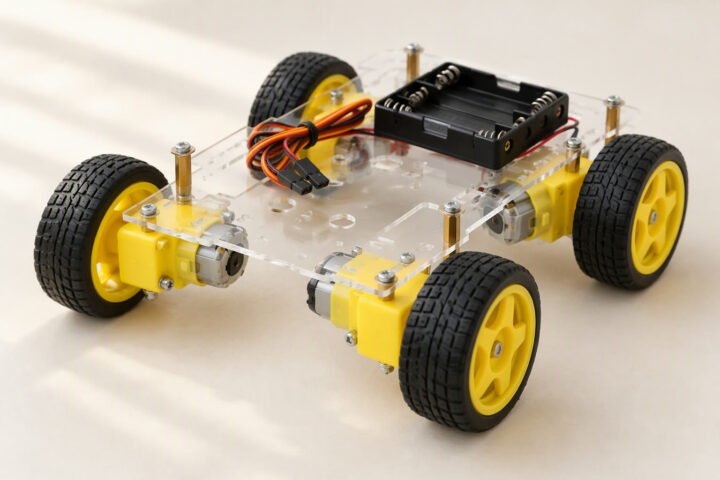
Wheel size, material, drive layout and motor mounts decide whether a chassis rolls or fights you. What each option costs in India,…
Tutorials
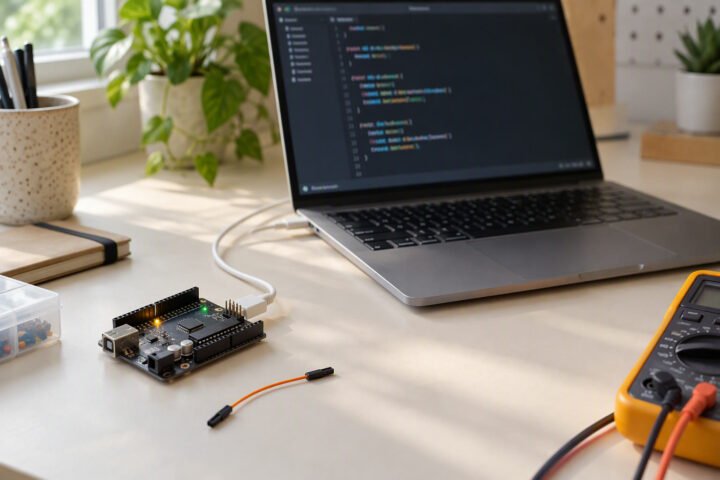
Install Arduino IDE 2, fix the CH340 clone driver, choose the right board and port, and get the blink sketch uploading without…